The 10 most-tested UIL Biology topics
After cataloging hundreds of recent UIL Biology items, ten topics drive most of the points. Here's where to actually spend your study time.
Lonestar Academics editorial
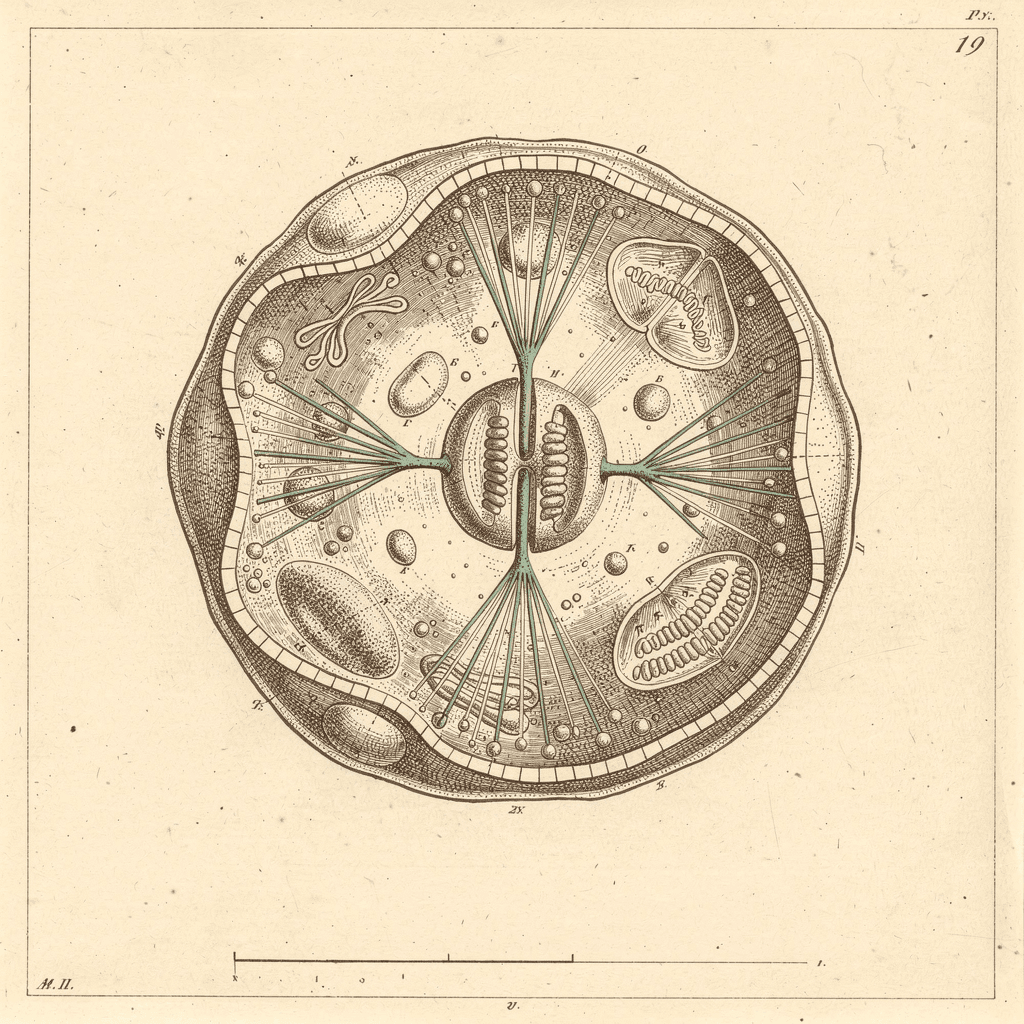
UIL Biology questions are not evenly distributed across the textbook. After cataloging hundreds of UIL Biology items from recent contest seasons, a small number of topics show up over and over, while a few crowd-favorite high-school topics barely appear. If you have 20 hours to study, you should not spend them uniformly. Spend them here.
These are the ten topics that drive the largest share of UIL Biology points, ranked roughly by question frequency in recent seasons. Each entry breaks the topic down into the actual sub-areas contest writers like to test, rather than the broad textbook chapter heading.
1. Cellular respiration and metabolism
The single most-tested topic. Expect questions on glycolysis, Krebs/citric acid cycle, electron transport, ATP yield per glucose, and the role of NAD+/FAD as electron carriers. Anaerobic respiration (fermentation pathways and lactate production) shows up most years.
2. Photosynthesis
Light-dependent vs Calvin cycle reactions, location (thylakoid vs stroma), the role of photosystems I and II, and the products of each stage. Comparison questions between respiration and photosynthesis as opposite processes are a near-certainty.
3. Mitosis and meiosis
Stage identification (prophase/metaphase/anaphase/telophase), chromosome counts at each stage, the role of crossing over in meiosis I, and the differences between mitosis and meiosis are a staple. Expect at least one question requiring you to count chromosomes through a specific stage.
4. Mendelian and molecular genetics
Punnett-square problems (mono- and dihybrid), incomplete dominance, codominance, sex-linked inheritance, and the relationship between genotype and phenotype. Molecular genetics adds DNA replication, transcription/translation, the genetic code, and mutation types.
5. Ecology and population dynamics
Trophic levels, energy flow (the 10% rule), food webs, biomes, symbiotic relationships (mutualism / commensalism / parasitism), carrying capacity, and population growth (exponential vs logistic). Carbon-cycle questions show up regularly; nitrogen and water cycles appear almost as often.
6. Evolution and natural selection
Hardy-Weinberg equilibrium calculations, types of selection (directional, stabilizing, disruptive), speciation mechanisms (allopatric vs sympatric), and evidence for evolution (fossil record, comparative anatomy, molecular biology).
7. Plant anatomy and physiology
Xylem vs phloem, transpiration, stomatal regulation, plant hormones (auxin, gibberellin, cytokinin, ethylene), tropisms, and the difference between monocots and dicots. Root, stem, and leaf cross-section identification appears frequently.
8. Human anatomy: cardiovascular and respiratory
Heart chambers and valves, blood flow (pulmonary vs systemic circuit), gas exchange in alveoli, oxygen-hemoglobin dissociation, and the regulation of breathing. Less common: digestive and renal physiology, but they do appear.
9. Cell biology and organelles
Organelle function (especially mitochondria, chloroplasts, ribosomes, ER, Golgi), membrane transport (passive vs active, osmosis, facilitated diffusion), and the differences between prokaryotes and eukaryotes. Endosymbiotic theory, which explains the origin of mitochondria and chloroplasts, is asked surprisingly often.
10. Taxonomy and biodiversity
The hierarchy (Domain / Kingdom / Phylum / Class / Order / Family / Genus / Species), characteristics of the three domains, and broad characteristics of major animal phyla and plant divisions. Binomial nomenclature conventions show up most years.
How to actually use this list
Two practical moves:
- Take a real practice test cold first. Before you start cramming the top 10, sit a 60-question UIL Science test on a timer. Whatever subjects you score below 60% on are where points are leaking, and that’s where the next ten hours of study should go.
- Drill at the subtopic level. A week of generic “biology” review tends to feel productive without moving any specific accuracy number. Thirty minutes on “Krebs cycle ATP yield” almost always does. Lonestar Academics’s Weak Spot mode handles this automatically by surfacing your lowest-accuracy subtopics.
Continue reading